Earthquake Sensors Track Space Junk Reentry
2 min read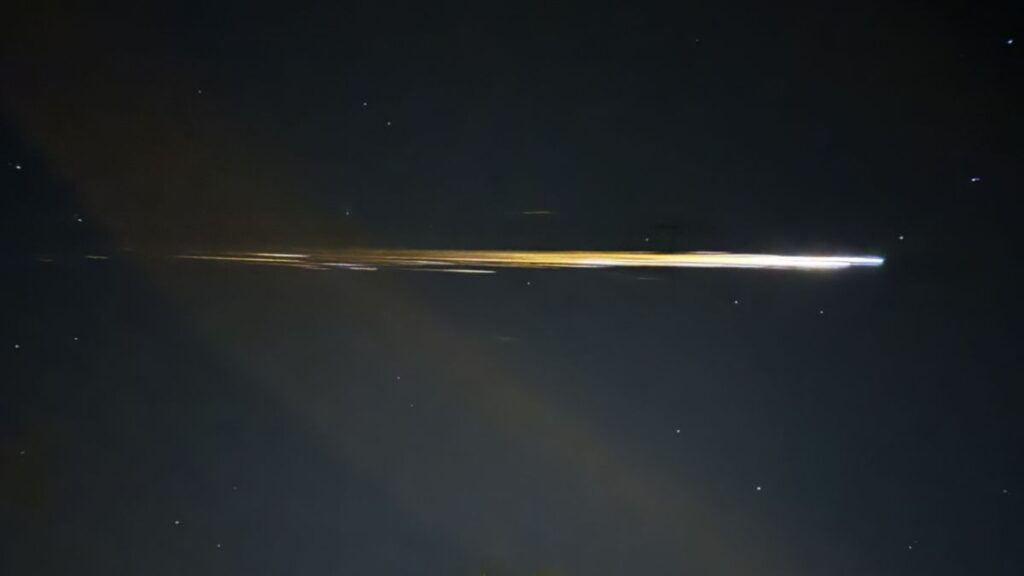
Introduction
Scientists have discovered a groundbreaking method to track the uncontrolled reentry of space debris. This innovative approach uses earthquake sensors to detect sonic booms created by space junk entering Earth’s atmosphere. This discovery could significantly enhance our ability to monitor potentially hazardous space debris.
Understanding the Problem of Space Junk
Space junk, or space debris, refers to defunct satellites, spent rocket stages, and other fragments left in orbit. These objects pose a threat to active satellites and the International Space Station. As more debris accumulates, the risk of collisions increases. This makes monitoring their reentry crucial. Learn more about space debris.
How Earthquake Sensors Detect Sonic Booms
Earthquake sensors, typically used to measure seismic activity, have proven effective in detecting sonic booms caused by reentering debris. These sonic booms occur when objects travel faster than the speed of sound, creating shock waves. The sensors pick up these waves, allowing scientists to track the debris’s path. Read more about the study.
The Science Behind Sonic Booms
Sonic booms are loud noises similar to an explosion. They occur when an object travels through the atmosphere faster than the speed of sound. This phenomenon has been well-studied in aviation but using it to track space debris is a novel application. For instance, NASA has extensively researched sonic booms related to aircraft.
Implications for Space Debris Management
Tracking space debris reentry with earthquake sensors offers several advantages. It provides real-time data on the location and trajectory of falling debris. This information is crucial for predicting potential impact zones and mitigating risks. Furthermore, this method is cost-effective, as it utilizes existing infrastructure. Consequently, it could become a standard tool in space debris management.
Future Developments and Challenges
While this method shows promise, challenges remain. Not all reentries produce detectable sonic booms, and distinguishing them from other sources requires advanced analysis. Nevertheless, researchers are optimistic about refining this technique. In conclusion, the integration of earthquake sensors into space debris tracking represents a significant step forward.

Conclusion
Overall, the use of earthquake sensors to detect sonic booms from reentering space junk is a pioneering development. It enhances our ability to monitor debris and reduce risks associated with space exploration. As more countries and organizations participate in space activities, effective debris management becomes increasingly important. This method could play a vital role in ensuring the safety of space missions and the preservation of Earth’s orbit.
Source: ScienceAlert
About The Author


