Davos Debates: U.S. Allies Question Global Stability
2 min read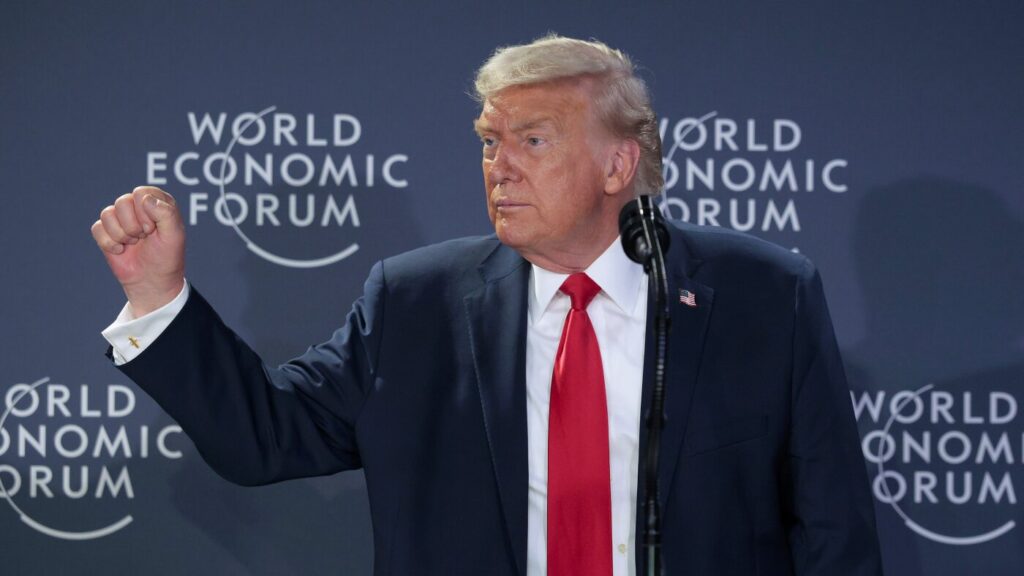
Davos Summit Raises Concerns Over U.S. Foreign Policy
The annual World Economic Forum in Davos, Switzerland, witnessed intense debates on the current state of global stability. The discussions were catalyzed by statements from U.S. President Donald Trump, which caused significant ripples across international markets and diplomatic circles. NPR reported that topics ranged from Greenland’s geopolitical significance to tensions in Gaza.

Strained Trans-Atlantic Relations
The week at Davos marked one of the most volatile periods for trans-Atlantic relations in recent history. President Trump’s remarks on various international issues have amplified tensions with longstanding U.S. allies. For instance, his comments about potentially purchasing Greenland from Denmark were met with confusion and consternation. Danish Prime Minister Mette Frederiksen dismissed the idea as “absurd,” emphasizing that Greenland is not for sale.
Additionally, the U.S. administration’s stance on the Israeli-Palestinian conflict, especially the situation in Gaza, further complicated America’s diplomatic engagements. European leaders expressed concern over the lack of a coherent strategy to address these complex issues. Learn more about Greenland.
Impact on Global Markets
President Trump’s unpredictable statements have unsettled global markets. Analysts noted that his remarks often lead to immediate market fluctuations, reflecting investor uncertainty. For example, his comments about potential trade tariffs on European automobiles caused a temporary dip in stock markets, as investors feared a looming trade war.

Furthermore, the Davos discussions highlighted the broader implications of such volatility on international trade and economic cooperation. Reuters reported that several business leaders urged for more stable and predictable economic policies to foster global growth.
Calls for a Unified Global Approach
Many leaders at Davos called for a more unified approach to global challenges. French President Emmanuel Macron emphasized the need for collaborative efforts to tackle climate change, global health issues, and economic inequality. He argued that unilateral actions could undermine the progress made through multilateral agreements.
Moreover, German Chancellor Angela Merkel highlighted the importance of strengthening international institutions like the United Nations and World Trade Organization. She stressed that these bodies are crucial for maintaining global order and resolving conflicts through dialogue rather than confrontation.
Looking Ahead: Future Implications
In conclusion, the discussions at Davos underscored the fragility of the current world order. As U.S. allies question the reliability of American foreign policy, the need for diplomatic engagement and multilateral cooperation becomes increasingly urgent. The outcomes of these debates will likely influence future international relations and economic policies.
Overall, the Davos summit served as a reminder of the interconnected nature of today’s global challenges. As nations navigate these complexities, leaders must prioritize dialogue and collaboration to ensure a stable and prosperous future.
Source Attribution: This article is based on information from NPR and other reputable sources.
About The Author