Europe’s Strategic Shift to Reduce US Dependence
2 min read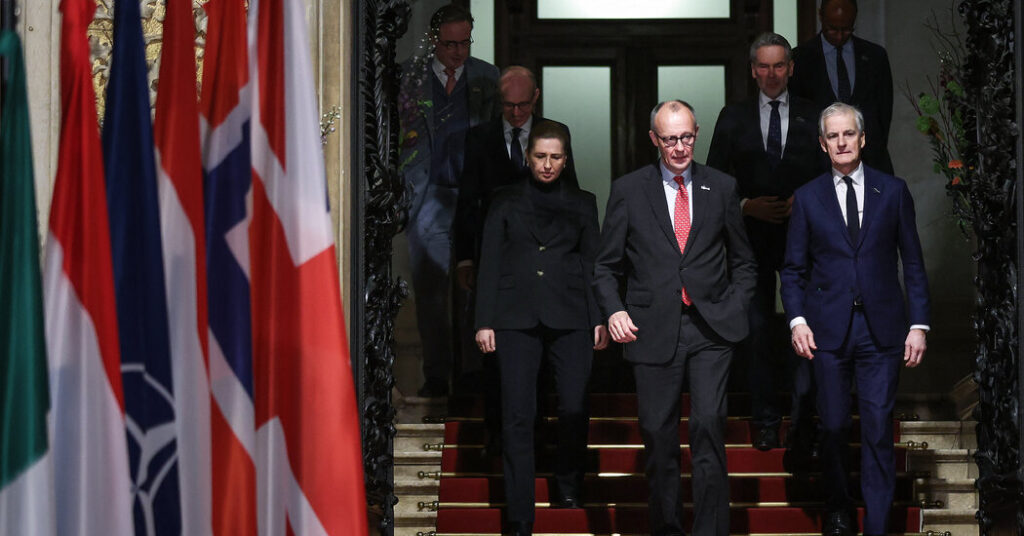
European Leaders React to Tensions with the US
Following President Trump’s controversial remarks concerning Greenland and threats to impose economic measures on Europe, leaders across the continent have mobilized to address the potential fallout. An emergency meeting held in Brussels saw European Union members discussing strategies to mitigate their reliance on the United States.
European officials expressed concern over the deterioration of transatlantic relations. This sentiment was echoed in policy papers circulated at the meeting, emphasizing the need for Europe to strengthen its autonomy in critical areas such as energy, defense, and technology.

Increasing Energy Independence
One of the primary focuses of the discussions was energy independence. European countries have long been dependent on the US for energy imports, particularly natural gas. However, leaders are now exploring alternative sources. For instance, the EU has initiated talks with Norway and Algeria to increase their energy partnership. Furthermore, they aim to accelerate the development of renewable energy projects within the continent to reduce dependency on external sources.
The New York Times reported that these initiatives could potentially reshape Europe’s energy landscape.
Strengthening Defense Capabilities
Additionally, European nations are evaluating their defense strategies. The reliance on NATO, which is heavily supported by the US, has been called into question. Consequently, Europe is considering the expansion of the European Defense Fund. This fund aims to enhance military research and development within the EU.
The European Commission has proposed increasing defense spending and fostering collaboration among member states to create a more self-reliant defense framework.
Advancements in Technology and Trade
Moreover, the EU seeks to bolster its technological sector. By investing in home-grown technology firms, Europe hopes to reduce its reliance on American tech giants. This move is seen as a way to safeguard data privacy and promote innovation.
In terms of trade, Europe plans to diversify its trading partners. Officials are negotiating trade agreements with countries in Asia and Africa. As a result, Europe aims to decrease its economic exposure to the unpredictability of US policies.
Wikipedia offers more background on the EU’s economic structure.
Conclusion: A New Era for European Autonomy
In conclusion, Europe’s response to the recent tensions with the US signals a significant shift towards increased autonomy. European leaders are taking decisive steps to ensure the continent’s economic and strategic independence. These efforts, if successful, could herald a new era of European self-reliance.
As Europe reshapes its policies, the global balance of power may shift. The implications of this transition will likely unfold over the coming years.
For more information on this unfolding story, readers can refer to The New York Times.
Source Attribution
Original source verified by The New York Times. Published on January 31, 2026. Accessed via The New York Times.
About The Author