German Executive Calls for World Cup Boycott Over Trump
3 min read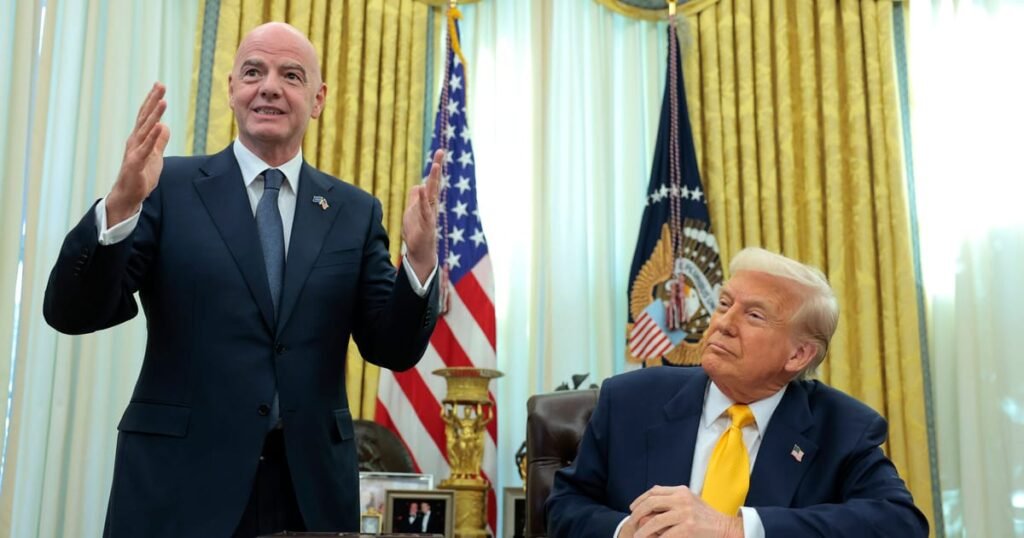
In a bold move, a leading German football executive has called for a boycott of the FIFA World Cup to protest against former U.S. President Donald Trump. The executive criticized the perceived political alignment between FIFA and Trump, urging European nations to take a stand.
The Call for Action
World Cup Donald Trump Details
At a recent press conference, St. Pauli President Oke Göttlich voiced concerns over the relationship between FIFA President Gianni Infantino and Trump. According to Göttlich, Infantino’s leadership has shown double standards by ignoring political issues surrounding Trump’s presidency while condemning Qatar for its controversies. Göttlich stated, “It’s time European nations unite in protest to safeguard football’s integrity.”

The executive’s comments have sparked a debate across Europe and beyond. Many wonder if a boycott is feasible or effective. Göttlich believes it would send a powerful message against the politicization of sports. Meanwhile, the sports community remains divided over the potential repercussions of such a drastic measure.
FIFA’s Political Dilemma
FIFA, recognized as the sport’s global governing body, has faced criticism for its handling of political issues. Infantino, who has led FIFA since 2016, has often been seen as an ally of Trump, particularly after the U.S. secured the 2026 World Cup hosting rights. Critics argue that FIFA’s decision-making appears inconsistent. For instance, the organization has previously sanctioned nations over political interference, yet it accommodates Trump’s controversial policies.

Read more on POLITICO. Furthermore, the double standards extend to other areas, such as the choice of host countries. As FIFA prepares for the 2026 World Cup, questions about its criteria and transparency remain.
European Reactions and Implications
European football associations have responded with mixed reactions. Some support Göttlich’s stance, seeing it as a necessary step to maintain football’s apolitical nature. Others fear a boycott could alienate fans and sponsors. UEFA, the European governing body, has yet to comment officially. However, insiders suggest they are monitoring the situation closely.
In addition, political leaders in Europe are considering the broader implications. A World Cup boycott could impact diplomatic relations with the U.S. Consequently, it might affect economic ties and international collaboration beyond sports.
Learn more about the 2026 FIFA World Cup.
The Road Ahead
As discussions continue, the future of a boycott remains uncertain. Football fans and officials alike are watching closely to see how this situation unfolds. Göttlich’s call has undoubtedly sparked a significant conversation about the role of politics in sports. Whether this will lead to tangible action remains to be seen.
Finally, the debate highlights the ongoing struggle within international sports governance. It raises essential questions about integrity, transparency, and the balance between sports and politics. As the world inches closer to the 2026 World Cup, these issues will likely remain in the spotlight.
Visit FIFA’s official website for more information.
Source Attribution
Information for this article was sourced from POLITICO.eu.
About The Author