James Webb Reveals Stunning Helix Nebula Details
2 min read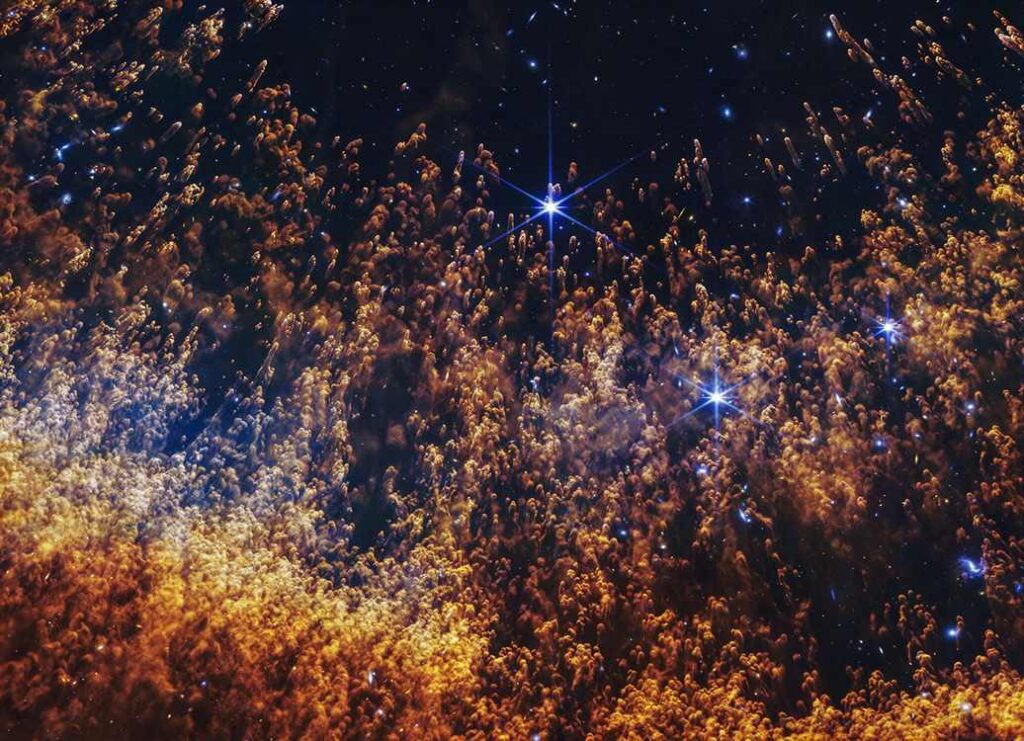
James Webb Reveals Stunning Helix Nebula Details
The cosmos has once again unveiled its magnificence through the lens of the James Webb Space Telescope. The latest image of the Helix Nebula, often likened to the Eye of Sauron from The Lord of the Rings, captures the star’s final breath in unprecedented detail. This celestial display has fascinated astronomers and enthusiasts alike, offering new insights into the life cycle of stars.
The Helix Nebula: A Cosmic Icon
Located approximately 650 light-years away in the constellation Aquarius, the Helix Nebula is a planetary nebula formed by the shedding of the outer layers of a dying star. Previous space telescopes, such as Hubble and Spitzer, have imaged it many times. However, the James Webb Space Telescope’s advanced capabilities have provided a more detailed view of this cosmic phenomenon. Learn more about the Helix Nebula.
What the James Webb Image Reveals
The new image showcases the nebula’s intricate structure, resembling columns of smoke emanating from its center. This effect results from the interaction of stellar winds expelled by the dying star with the surrounding gas and dust. As the star nears the end of its lifecycle, it ejects its outer layers, creating the stunning nebula that we observe today. Read the original article here.
Implications for Astronomy
The detailed imagery provided by the James Webb Telescope offers astronomers the opportunity to study the Helix Nebula’s composition more closely. By analyzing the light emitted from the nebula, scientists can determine the elements present and gain insights into the processes occurring during a star’s final stages. This information is crucial for understanding stellar evolution and the formation of planetary nebulae. Furthermore, such discoveries can inform our knowledge of the universe’s history.
Advanced Technology Behind the Image
The James Webb Space Telescope is equipped with state-of-the-art technology that allows it to capture infrared light, invisible to the human eye. This capability enables it to pierce through cosmic dust that obscures many astronomical objects. Consequently, the telescope can reveal features previously hidden in the Helix Nebula, offering a clearer picture of its internal structure. Visit the official James Webb Space Telescope page for more on its technology.
Future Discoveries on the Horizon
As the James Webb Space Telescope continues its mission, astronomers anticipate more groundbreaking discoveries. The detailed study of planetary nebulae like the Helix can provide invaluable data on the lifecycle of stars similar to our Sun. These findings not only enhance our understanding of cosmic events but also inspire future generations to explore the mysteries of the universe. In conclusion, the James Webb Telescope’s new image of the Helix Nebula is a testament to human ingenuity and the endless wonders of space exploration.
Source Attribution: This article is based on information from the Good News Network.
About The Author


