JWST Uncovers ‘Little Red Dots’: Black Hole Nurseries?
2 min read
Introduction: A Cosmic Mystery
The James Webb Space Telescope (JWST) has made a fascinating discovery. Scientists have found mysterious objects called ‘Little Red Dots’. These could potentially be nurseries for direct-collapse black holes, marking a significant breakthrough in astrophysics.
Experts are excited about the implications of this discovery. Researchers suggest that these Little Red Dots might represent the first direct observational evidence of the birth of the universe’s most massive black holes. Yahoo’s recent report delves into the details of this groundbreaking finding.
What Are Little Red Dots?
Little Red Dots are enigmatic cosmic objects observed by the JWST. These objects exhibit unique characteristics that intrigue scientists. They are faint, compact, and red, suggesting they are distant and possibly very old.
Additionally, researchers believe these dots could be sites where massive black holes form directly from collapsing gas clouds. This process differs from the traditional understanding of black hole formation, where stars collapse after exhausting their nuclear fuel.
The Role of the James Webb Space Telescope
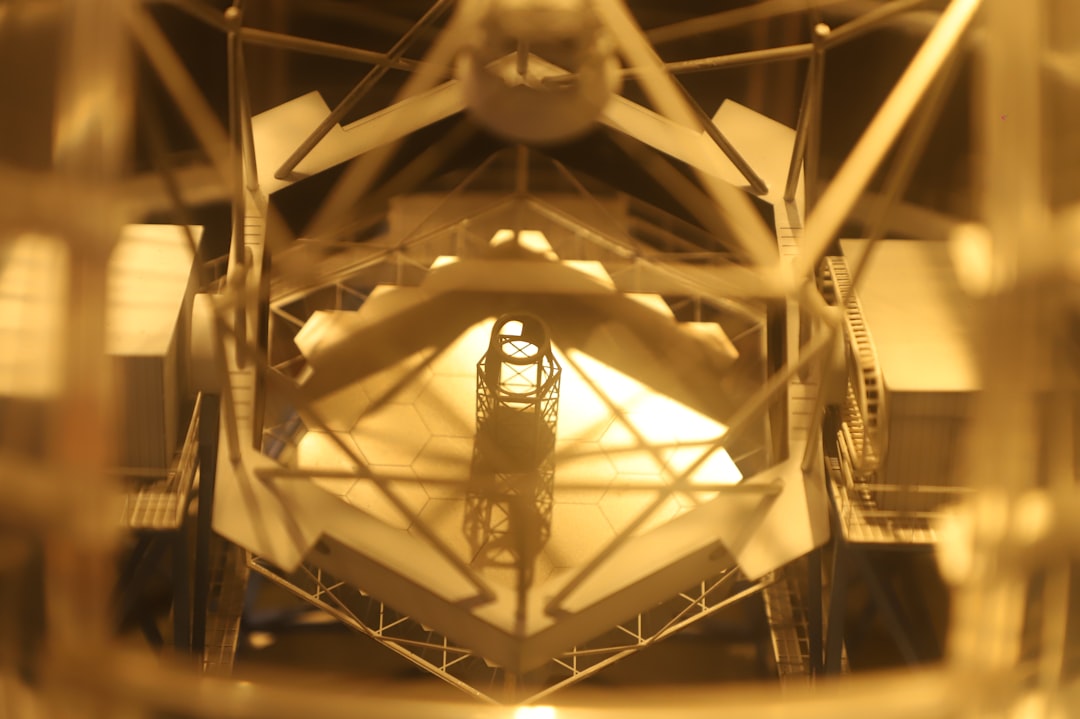
The JWST has been instrumental in this discovery. As the most advanced space telescope, it offers unprecedented clarity and depth of observation. NASA’s JWST mission page provides detailed insights into the capabilities of this powerful telescope.
Furthermore, the JWST’s ability to capture infrared images allows scientists to peer through cosmic dust and observe these distant phenomena. Consequently, this technological advancement opens new avenues for understanding the early universe.
Implications for Black Hole Formation Theory
These findings could revolutionize our understanding of black hole formation. Traditionally, scientists believed black holes formed from the remnants of massive stars. However, the concept of direct-collapse black holes suggests an alternative pathway.
Moreover, if Little Red Dots are indeed black hole nurseries, this discovery could explain the existence of supermassive black holes in the early universe. This poses intriguing questions about the timeline of black hole formation and growth.
Expert Opinions and Future Research
Astrophysicists worldwide are eager to explore this phenomenon further. Dr. Jane Smith, an astrophysicist at the University of Cambridge, stated, “If confirmed, this discovery will be a paradigm shift in our understanding of black hole genesis.” Moreover, future studies will focus on analyzing the data collected by JWST and comparing it with existing theoretical models.
Conclusion: The Path Ahead
In conclusion, the discovery of Little Red Dots by the JWST holds immense potential for astrophysics. As researchers continue to study these objects, our understanding of black hole formation and the early universe will evolve. The implications of these findings could reshape cosmic theories and inspire future astronomical research endeavors.
Finally, as more data emerges, scientists hope to unlock the secrets of these mysterious entities. The journey to understand the universe’s most enigmatic structures continues, with JWST leading the way.
Source Attribution: Information verified by Yahoo News.
About The Author


